The Wardrobe Inventory: The Two-Hour Audit That Ends 'Nothing to Wear' Forever
‘Nothing to wear’ is almost never true — it’s ‘no idea what I own’: the duplicate whites, the forgotten dresses, the orphan pieces with no partners — and the two-hour inventory ends it. The wardrobe-audit guide: the case, the method and the action.

The Inventory Case
Why counting changes everything: the ownership blindness (the average wardrobe’s unworn share being famously large — the out-of-sight rotation problem; the closet functioning on the visible twenty percent), the duplicate diagnosis (the seventh white tee and fourth similar jean bought in ignorance — the repeat-purchase tax per the budget logic), the orphan discovery (the pieces owning no partners — the un-wearable-alone items explaining the stuffed-but-nothing closet per the pairing logic), the shopping-immunity effect (the known inventory making stores less persuasive — the already-own-that clarity), and the styling unlock (the inventory enabling outfit-building from the whole wardrobe — the forgotten pieces returned to service per the remix logic).

The Audit Method
The two-hour protocol: the category-by-category pass (the wardrobe processed in groups — the tops, bottoms, dresses, layers, shoes; the everything-out-of-one-category-at-a-time being manageable per the declutter logic), the count-and-photo layer (the tally per category — the phone photos of each piece or each category-flat-lay; the digital-closet apps for the committed per the app logic; the low-tech spreadsheet-or-notes legitimacy), the condition triage (the audit doubling as the detox trigger — the damaged-and-dead released per the detox logic; the inventory of KEEPERS being the goal), the wear-honesty tags (the loved-worn, the fine-forgotten, the never-worn labels — the data for the action phase), the gap-and-duplicate notes (the counts revealing the sevens-and-zeros — the four black blazers, the zero white shirts), and the maintenance design (the inventory updated at purchases-and-purges — the seasonal ten-minute refresh per the maintenance logic).
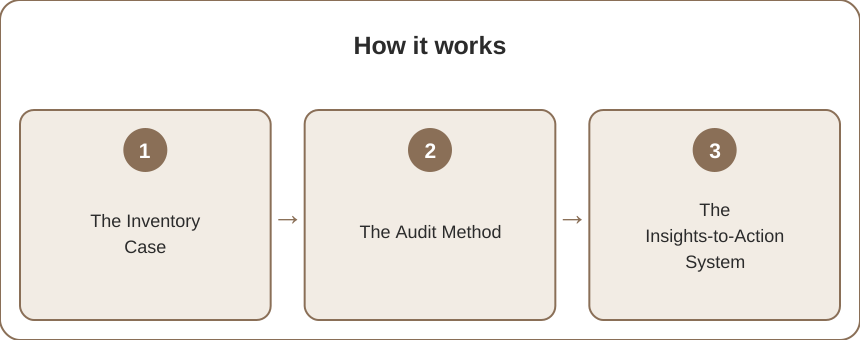
The Insights-to-Action System
Using what you learn: the duplicate response (the multiples reduced to the best one-or-two — the freed hangers; the category caps set per the one-in-one-out logic), the orphan resolution (the partner bought deliberately OR the orphan released — the complete-the-outfit shopping being the only shopping the inventory endorses per the gap logic), the forgotten-pieces revival (the fine-forgotten tier styled BACK into rotation — the one-forgotten-piece-per-week challenge; the remix from the mix-match logic), the shopping-list conversion (the gaps documented becoming the season’s entire list — the impulse purchases audited against the inventory per the strategic logic), the visibility fixes (the rotation systems and closet-organization moves that keep the whole wardrobe seen — the seasonal swap logic), and the closing frame (the two hours converting the closet from mystery to menu — the counts known, the orphans resolved, the gaps listed; the ‘nothing to wear’ retired by knowledge; the wardrobe, finally, fully owned). Count by category, tag the honesty, shop only the gaps: the inventory, done once, paying daily.
‘Nothing to wear’ means ‘no idea what I own’ — spend two hours counting by category with phone photos, tagging loved-worn / fine-forgotten / never-worn. The findings write the plan: reduce the seven white tees to two, buy partners for orphans or release them, revive one forgotten piece weekly, and let the documented gaps become the season’s entire shopping list.
Keep Reading
This article is for general styling and informational purposes only. Trends, sizing, availability and pricing may vary by brand and season.